
If you’re comparing solar panels for the first time, you’ll almost always see two options mentioned: monocrystalline and polycrystalline. Both convert sunlight into electricity, but they can differ in efficiency, roof space needs, appearance, and sometimes price.
This guide explains the differences in plain language, shows you what specs matter most, and helps you choose the best value for your roof—not the best marketing label.
Who this is for
- Homeowners choosing panel type for a first solar quote
- Anyone trying to understand “efficiency” without getting technical
- People with limited roof space who want the most output per square meter/foot
The quick difference (in one sentence)
- Monocrystalline: typically higher efficiency and better when roof space is limited.
- Polycrystalline: often lower efficiency but can still be cost-effective when space is not tight.
Start here (pillar): https://solarbasicshub.com/solar-basics/
Monocrystalline vs polycrystalline: side-by-side comparison
| Feature | Monocrystalline | Polycrystalline |
|---|---|---|
| Typical efficiency | Higher (more watts per area) | Lower (more area for the same output) |
| Roof space needed | Less space for the same kW system | More space for the same kW system |
| Appearance | Often darker/black, more uniform look | Often bluish/speckled look |
| Heat performance | Depends on the specific model; compare the temperature coefficient | |
| Best fit | Small roofs, maximizing output per panel | Larger roofs, value-focused setups |
| Market availability | Very common | Less common than before, but still available |
Important: in today’s market, “type” matters less than the model
A strong polycrystalline panel with a solid warranty can beat a weak monocrystalline model. When comparing options, focus on the panel’s spec sheet and warranty terms, not just “mono vs poly.”
If you only remember three things, remember these:
- Efficiency matters most when space is limited
- Temperature coefficient matters in hot climates
- Warranty + degradation rate matter for long-term value
What efficiency really means (and when it matters)
Efficiency is the share of sunlight a panel can convert into electricity.
Higher efficiency panels:
- produce more power from the same roof area
- can reduce how many panels you need
- can help when your roof has limited usable space or shading constraints
If you have plenty of roof space, you can often get similar total output with slightly lower-efficiency panels by adding more panels—if your roof allows it.
Related sizing guide: https://solarbasicshub.com/solar-components-and-sizing-basics/
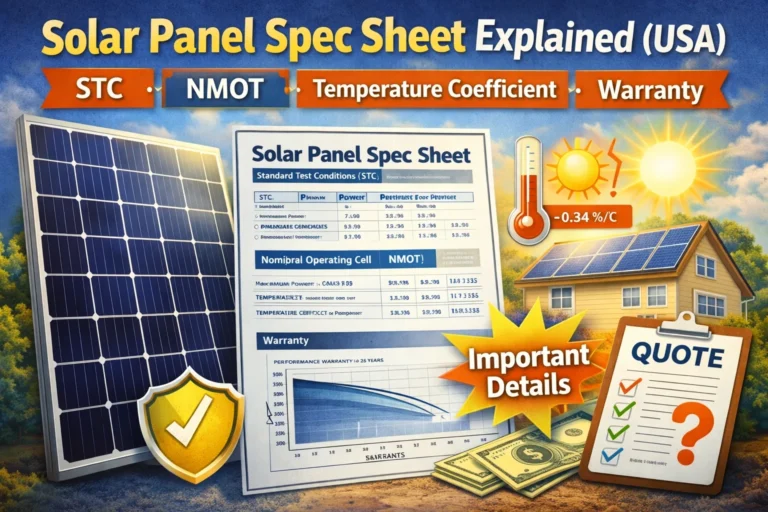
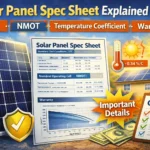
The 4 specs that matter more than the label
1) Power rating (Watts)
You’ll see ratings like 400W or 450W per panel. Higher wattage usually means more potential output per panel (but also compare size and efficiency).
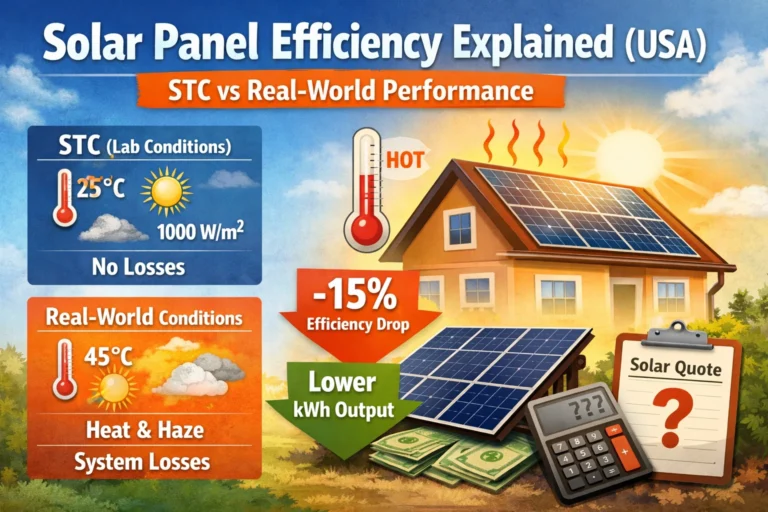
2) Temperature coefficient
Panels make less power when they’re hot. The temperature coefficient is usually a negative number (for example, -0.35%/°C).
As a rule of thumb: less negative is better (it loses less output in heat).
3) Degradation rate (performance over time)
Panels slowly produce a bit less each year. Compare:
- the annual degradation rate, and
- the guaranteed output after 25 years (performance warranty)
4) Product warranty
This covers manufacturing defects/materials. A longer warranty can be valuable—but read what’s included and who handles service.
Decision checklist: which should you pick?
Choose monocrystalline if:
- your roof space is limited
- you want the highest output per square meter/foot
- you prefer a uniform black look
- the price difference is small compared to the system total
Choose polycrystalline if:
- you have plenty of roof space
- the price difference is meaningful
- the specific poly model has strong specs and warranty
- you’re optimizing for “cost per kWh,” not aesthetics
A quick “value” framework (simple and practical)
When comparing two panel options, ask:
- Which one gives me more kWh per year on my roof (based on the quote’s production estimate)?
- What’s the total installed cost difference?
- Does the “more expensive” option pay back through higher production or better warranty terms?
If you’re comparing quotes, this cost breakdown helps: https://solarbasicshub.com/solar-cost-breakdown/
Common myths (quick reality check)
Myth: “Polycrystalline panels are bad.”
Reality: They can still be a solid choice if you have space and the model is good.
Myth: “Higher efficiency always saves money.”
Reality: Not always. Sometimes a slightly lower-efficiency panel with excellent warranty and price wins on value.
Myth: “Monocrystalline always performs better in low light.”
Reality: Low-light behavior depends on the model. Compare spec sheets and real-world test data when possible.
FAQ
Are polycrystalline panels outdated?
They’re less common than before, mainly because mono prices dropped. But “less common” doesn’t mean “wrong.”
Will monocrystalline give me more power in the real world?
Often yes per square meter, because it tends to be more efficient—but system design, shading, and inverter limits can matter more.
Learn how inverter choice impacts performance: https://solarbasicshub.com/string-inverter-vs-microinverter/
Which is better for hot climates?
Compare the temperature coefficient and the manufacturer’s performance data. The label alone doesn’t guarantee better heat behavior.
When to consult a professional
If you’re unsure about roof space, shading, roof structure, or local interconnection rules, consult a qualified installer. Roof layout and shading can change the best panel choice more than mono vs poly ever will.
Quick recap
- Monocrystalline is usually higher efficiency and best when space is limited.
- Polycrystalline can still be good value when you have space and strong specs.
- Always compare the specific model specs (temperature coefficient, degradation, warranty) and the kWh/year estimate in your quote.