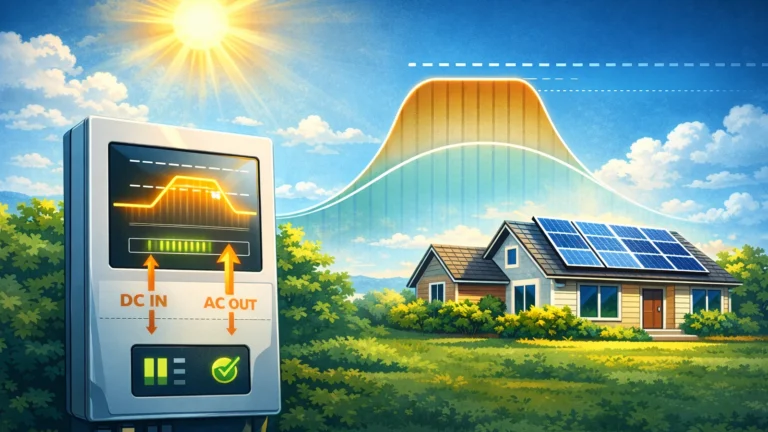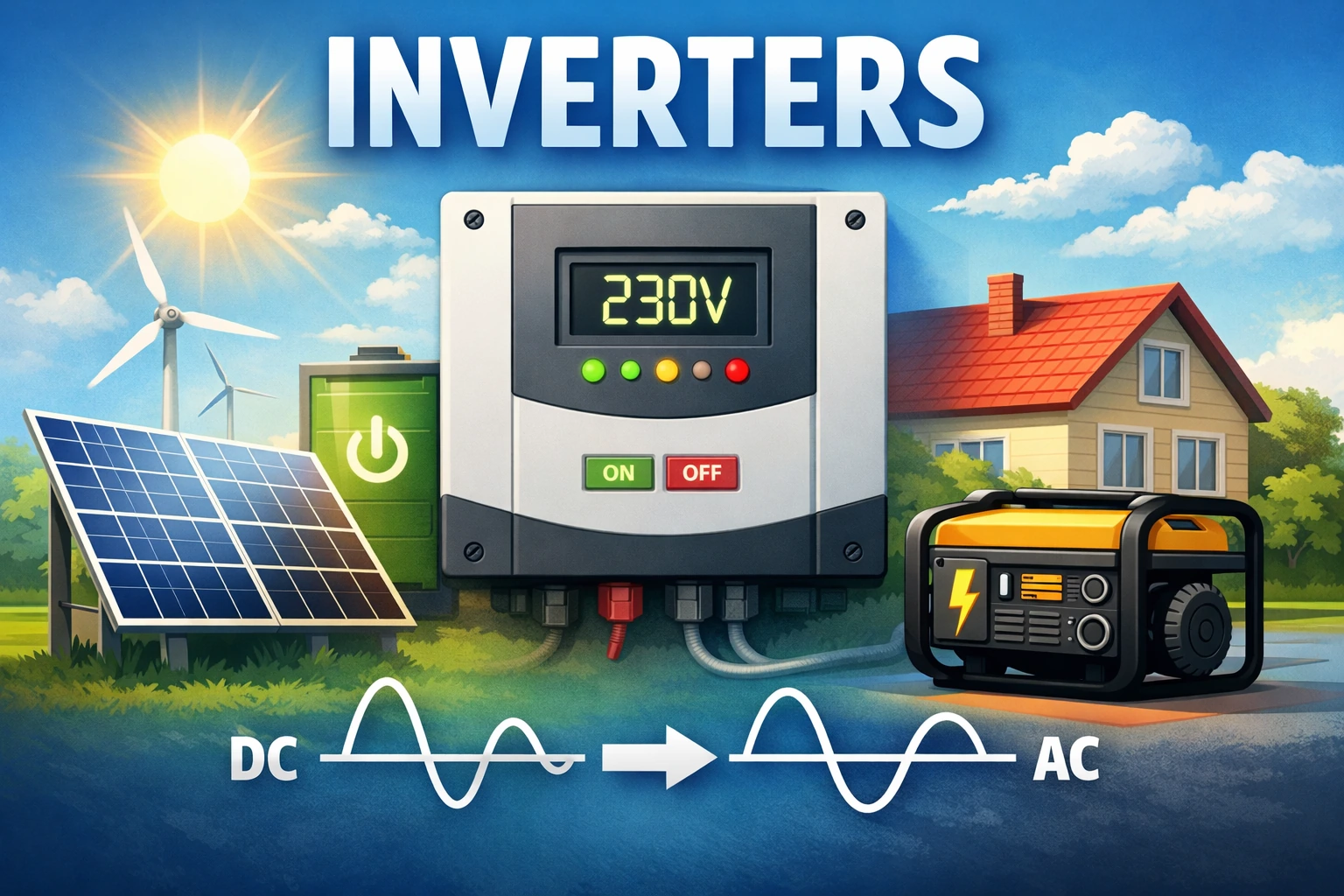

Solar panels produce DC electricity, but your home uses AC. That’s the inverter’s job: convert DC to AC and manage system performance.
Most residential systems use either:
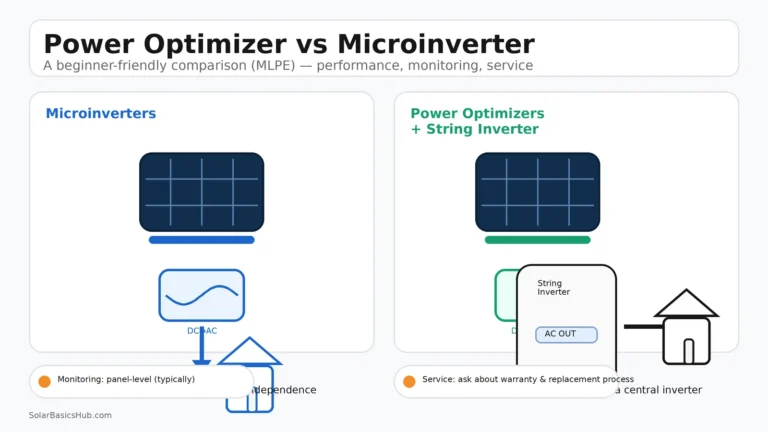
- a string inverter (one main inverter for multiple panels), or
- microinverters (one small inverter per panel)
Both can work very well. The “best” choice depends on your roof layout, shading, and how you want to monitor performance.
Who this is for
- Beginners comparing solar quotes with different inverter setups
- Homeowners with partial shading or multiple roof faces
- Anyone trying to understand why inverter choice affects price
Quick definitions
String inverter
Panels are connected in groups (“strings”), and one inverter converts power for the group.
Microinverters
Each panel has its own microinverter, converting power at the panel level.
Comparison: string inverter vs microinverter
| Factor | String inverter | Microinverter |
|---|---|---|
| Best for | Simple roofs, little shading | Complex roofs, partial shading |
| Failure impact | One inverter affects many panels | One micro affects one panel |
| Monitoring | Often system-level (can be panel-level with add-ons) | Usually panel-level monitoring |
| Upfront cost | Often lower | Often higher |
| Expandability | Can be limited by inverter capacity | Easier to add panels (within limits) |
| Shading behavior | Shading can reduce output for a string | Shading affects mostly that panel |
Decision matrix (fast way to choose)
Microinverters make sense when:
- you have partial shading (trees, chimneys, nearby buildings)
- panels face different directions (multiple roof planes)
- you want panel-by-panel monitoring
- you value easier troubleshooting visibility
String inverter makes sense when:
- roof is simple and mostly unshaded
- you want a cost-effective design
- you’re comfortable with system-level monitoring
- you prefer fewer electronics on the roof
What about optimizers? (common “middle option”)
Some systems use a string inverter + optimizers (one optimizer per panel). This can improve performance in shade and give panel-level data, depending on the setup.
If your quotes include optimizers, compare:
- total cost difference
- warranty terms
- monitoring features
- installer preference and service capability
Practical questions to ask your installer
- “How much shading do I have across seasons?”
- “How many roof faces and tilt angles are used?”
- “Will I get panel-level monitoring?”
- “What’s the warranty for inverter components and labor?”
- “If one component fails, what happens and how quickly is it serviced?”
Simple troubleshooting advantage (why monitoring matters)
Panel-level monitoring (often with microinverters) can help identify:
- one underperforming panel
- intermittent shading issues
- a failed component affecting a small portion of the array
This doesn’t automatically mean microinverters are “better”—it just makes visibility easier.
When to consult a professional
Inverter choice impacts electrical design, code compliance, and rooftop equipment layout. Always consult a qualified installer/electrician—especially if your roof has multiple orientations or shading challenges.