
Solar is low maintenance—but not zero maintenance. Dust, shade changes, loose mounts, and inverter errors can quietly reduce production.
This checklist focuses on safe, non-technical checks that help you spot issues early.
Who this is for
- Homeowners with an existing solar system
- Anyone who wants to keep production steady year-round
- Beginners who want a “what to check” routine without risky DIY
Safety first (read this)
Do not open electrical boxes, disconnect equipment, or climb on roofs unless you’re trained and equipped to do so safely. If you suspect an electrical problem, contact a qualified professional.
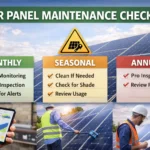
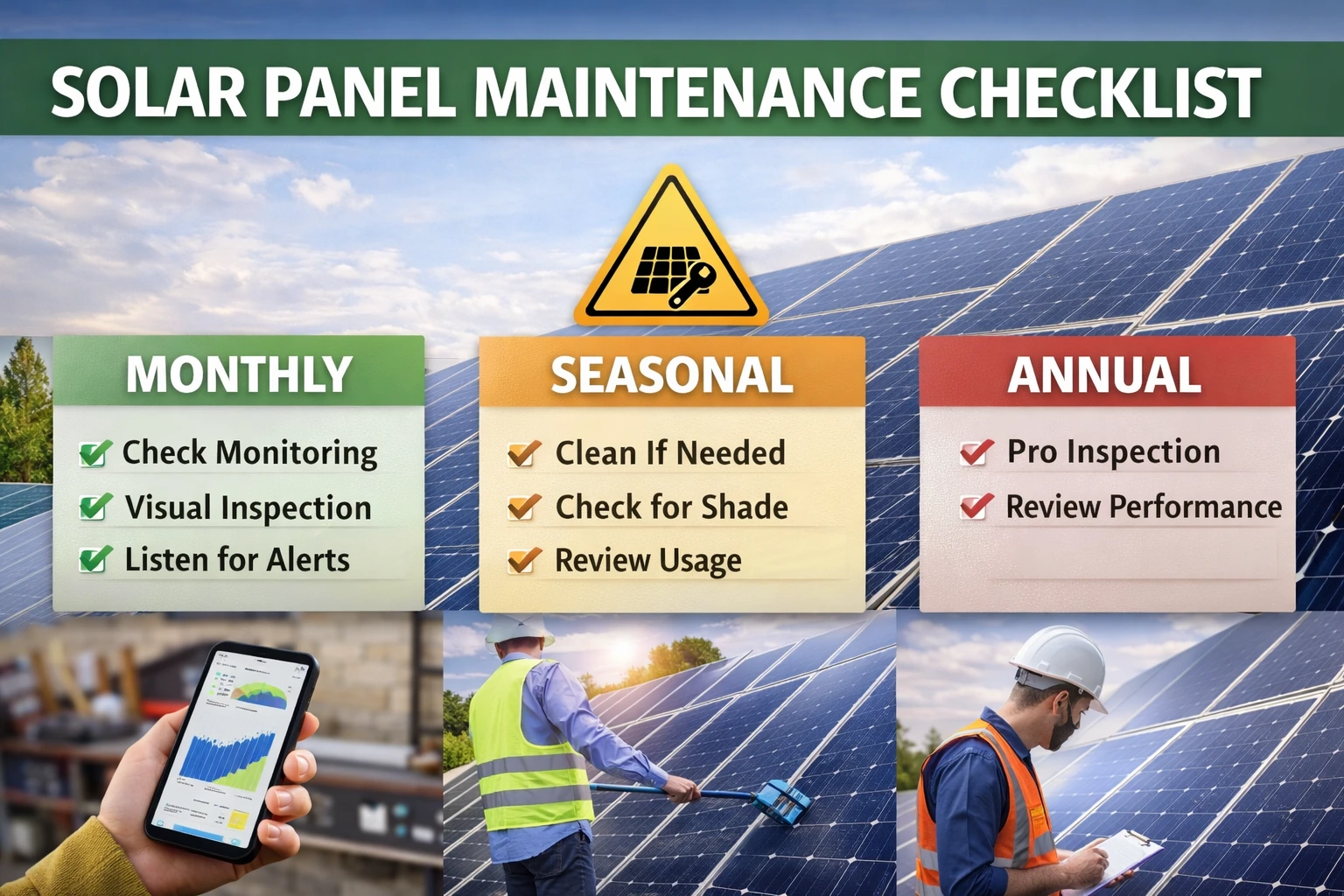
Monthly checklist (10 minutes)
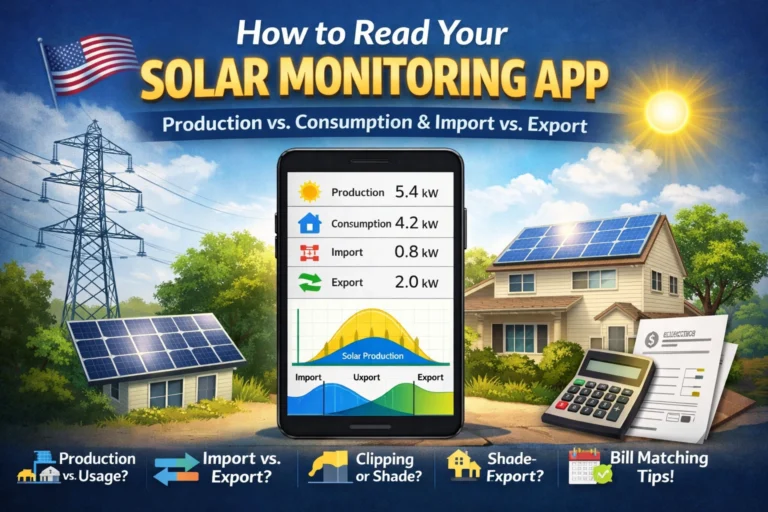
1) Check your monitoring app
- Compare this month to last month (seasonal change is normal)
- Look for sudden drops or “flat” production days
2) Quick visual check (from the ground)
- Any new shade? (trees, new buildings, satellite dishes)
- Obvious debris buildup (leaves, heavy dust)
- Any panel that looks physically damaged
3) Listen for inverter alerts
- If your inverter/app shows warnings, note the code/message.
Seasonal checklist (every 3 months)
1) Cleanliness check (only if needed)
- If panels look noticeably dirty, consider a safe cleaning approach from the ground or hire a cleaner.
- In many areas, rain does most of the work; cleaning is most helpful after long dry/dusty periods.
2) Shade changes
- Seasonal sun angle can change shading patterns.
- If performance dips at the same time daily, shade is a common cause.
3) Review bills/usage
- If your usage increased (new appliance, AC/heater habits), “lower savings” may be usage—not solar failure.
Annual checklist (once a year)
1) Professional inspection (recommended)
A qualified pro can safely check:
- roof penetrations/flashing
- mounting integrity
- wiring condition (without guesswork)
- inverter/battery health and firmware updates
2) Performance review
- Compare year-over-year production (accounting for weather variability)
- If the drop is large and persistent, investigate.
Quick troubleshooting: “Why is my solar production low?”
Use this simple decision tree.
Step 1: Is the drop seasonal?
- Winter often produces less than summer (shorter days, lower sun angle).
Step 2: Did anything change on the roof?
- New shade (trees growth), new roof objects, dirt/debris.
Step 3: Is there an inverter warning?
- If yes: document the message and contact support/installer.
Step 4: Is only one area underperforming?
- Panel-level monitoring (if you have it) can reveal a single weak panel or a shaded section.
Red flags (call a professional)
- Burning smell, smoke, buzzing/arcing sounds
- Visible damaged wiring or melted components
- Water intrusion near electrical equipment
- Repeated inverter shutdowns or persistent error messages
Maintenance “do / don’t” table
| Do | Don’t |
|---|---|
| Use your monitoring app regularly | Ignore repeated inverter alerts |
| Visually inspect from the ground | Climb the roof without safety gear/training |
| Keep records of unusual dips | Open electrical enclosures yourself |
| Call a pro for persistent issues | Assume “it will fix itself” if errors continue |