Category Solar Costs & Payback

Understand solar pricing and payback: what drives total cost, typical cost components, incentives (where applicable), and simple ways to estimate ROI.

Solar Production Guarantee Explained (USA): What It Covers, How It’s Measured, Red Flags, and a Copy/Paste Contract Checklist

Solar production guarantee concept with rooftop solar panels and a contract checklist

A “production guarantee” can sound like bulletproof protection—but the fine print decides whether it helps. This guide explains how solar production guarantees are measured, what’s usually excluded, how compensation works, and the red flags that make a guarantee weak. Includes a copy/paste contract checklist for comparing quotes in the USA.

Demand Charges and Solar (USA): What They Are, How They’re Calculated, and How to Reduce Them (Without Risky DIY)

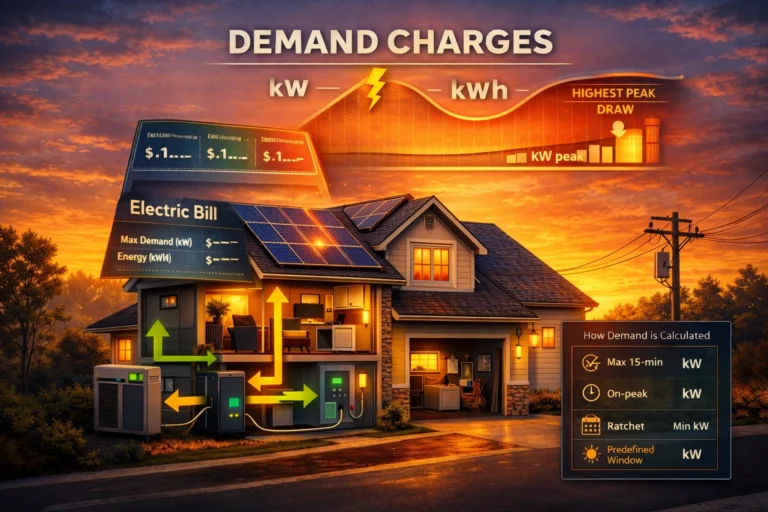
Demand charges and solar illustration showing rooftop panels, battery peak shaving, and electric bill kW vs kWh comparison at sunset

Demand charges can make your electric bill jump even if your kWh usage looks normal—because they’re based on your single highest power spike (kW) during the month. This homeowner guide explains demand charges in plain English, shows common calculation methods (15-minute peaks, on-peak demand, ratchets), and gives a safe peak-reduction playbook using scheduling, load staggering, and (when appropriate) batteries.

SRECs Explained (USA): What Solar Renewable Energy Credits (SRECs) Are, Who Can Earn Them, and How to Sell Them Safely

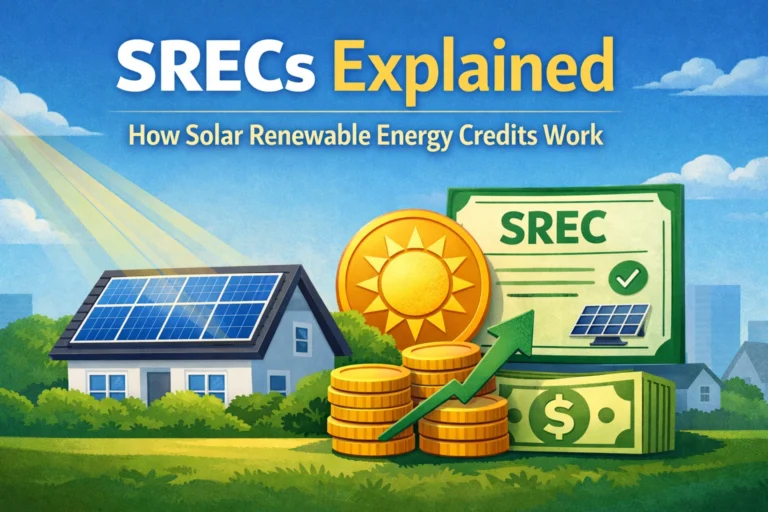
Solar rooftop panels with SREC certificate and rising savings coins illustrating solar renewable energy credits

SRECs (Solar Renewable Energy Credits) can add real value to a solar system in some U.S. states—but they’re easy to misunderstand. This guide explains SRECs in plain English, how you earn them (1 credit per 1,000 kWh), where they exist, how to sell them safely, and the key questions to ask so you don’t accidentally give them away in your solar contract.

Solar Export Limits & Curtailment (USA): What They Are, How They Affect Savings, and What to Ask Your Installer

Solar export limit and curtailment illustration showing a U.S. home with rooftop solar, an export meter, and a monitoring graph comparing clipping vs curtailment

An export limit is a cap on how much solar power you’re allowed to send to the grid. When that cap is active, your system may “curtail” output—even on a sunny day—so exports stay under the limit. This guide explains export limits in plain English, shows how to tell curtailment from clipping and shade using your monitoring app, and gives a copy/paste checklist to ask your installer (USA).