Category Solar Basics (Start Here)

New to solar? Start here for simple explanations of how solar power works, key terms, and the core parts of a solar system—without technical overload.

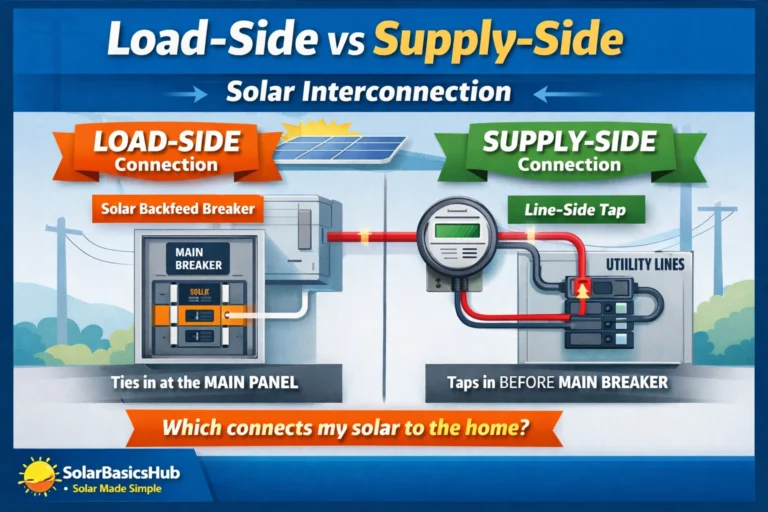
Load-Side vs Supply-Side Solar Interconnection Explained (USA): Breaker Connection vs Line-Side Tap, When Each Is Used, and What to Ask Your Installer

Load-side vs supply-side solar interconnection infographic showing solar backfeed breaker at the main panel versus line-side tap before the main breaker

Homeowners often hear “backfeed breaker,” “line-side tap,” or “supply-side connection” during solar quoting—but few understand what those terms mean. This guide explains the difference between load-side and supply-side solar interconnection in plain English, why panel limits matter, when installers choose each method, and what questions to ask before approving a design.

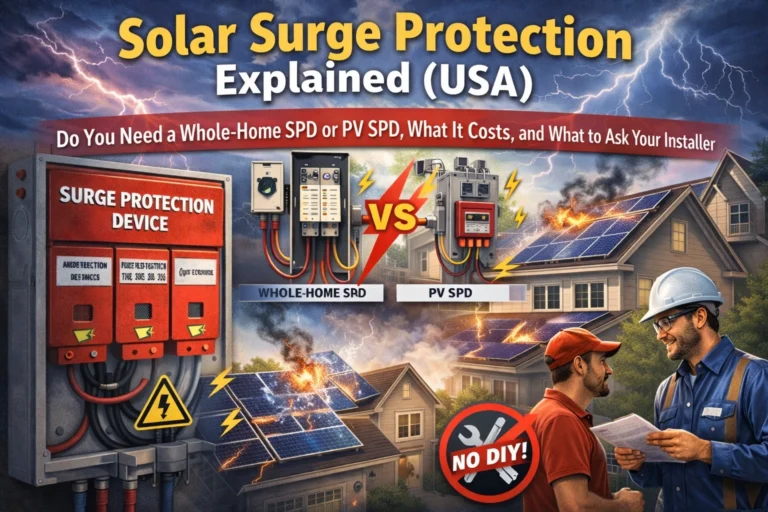
Solar Surge Protection Explained (USA): Do You Need a Whole-Home SPD or PV SPD, What It Costs, and What to Ask Your Installer (No Risky DIY)

Solar surge protection illustration showing whole-home SPD vs PV SPD with lightning storm and installer advising homeowner

Surge protection is one of the most overlooked “reliability” decisions in rooftop solar. This homeowner guide explains what solar surges are (lightning and grid switching), the difference between a whole-home surge protector and solar PV SPDs, what labels and standards matter (UL 1449 and IEC 61643 on datasheets), typical costs, and a copy/paste checklist to get everything in writing—without any risky DIY.

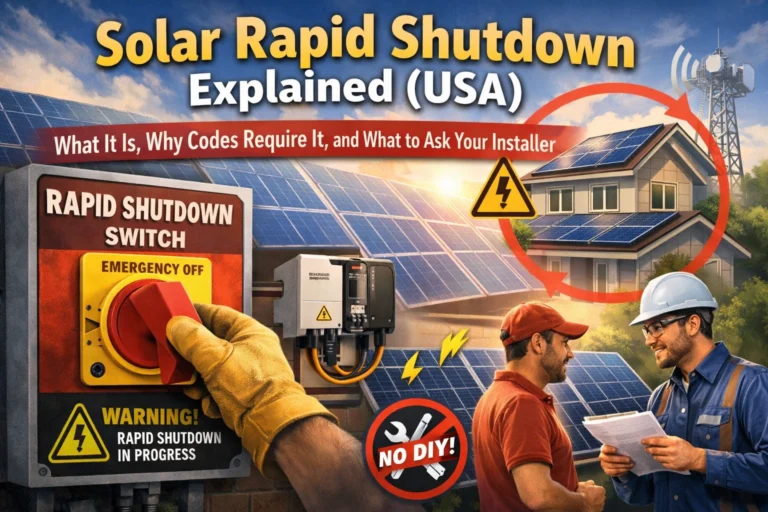
Solar Rapid Shutdown Explained (USA): What It Is, Why Codes Require It, and What to Ask Your Installer (No Risky DIY)

Solar rapid shutdown switch and rooftop solar home illustration with installer advising homeowner (USA)

Rapid shutdown is a solar safety feature required on many rooftop systems in the USA. This homeowner guide explains what it is (and what it isn’t), where the shutdown switch/labels are, how different inverter designs meet the rule, what UL 3741 means, and a copy/paste checklist to protect you before you sign—without risky DIY steps.

Solar Self-Consumption Explained (USA): What It Is, How to Calculate It, and How to Increase It (Without Risky DIY)

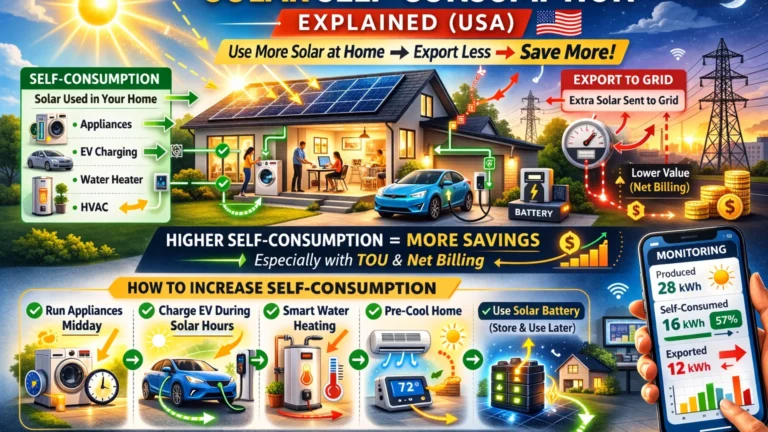
Solar self-consumption infographic showing solar used at home versus exported to the grid, with tips like load shifting, EV charging during solar hours, smart water heating, pre-cooling, and optional battery storage.

Self-consumption is the share of solar energy you use in your home instead of exporting to the grid. In many U.S. rate plans—especially net billing and TOU—this one number can change your savings more than panel efficiency. This guide shows how to calculate self-consumption (using your monitoring app or your bill) and how to increase it safely without risky DIY.