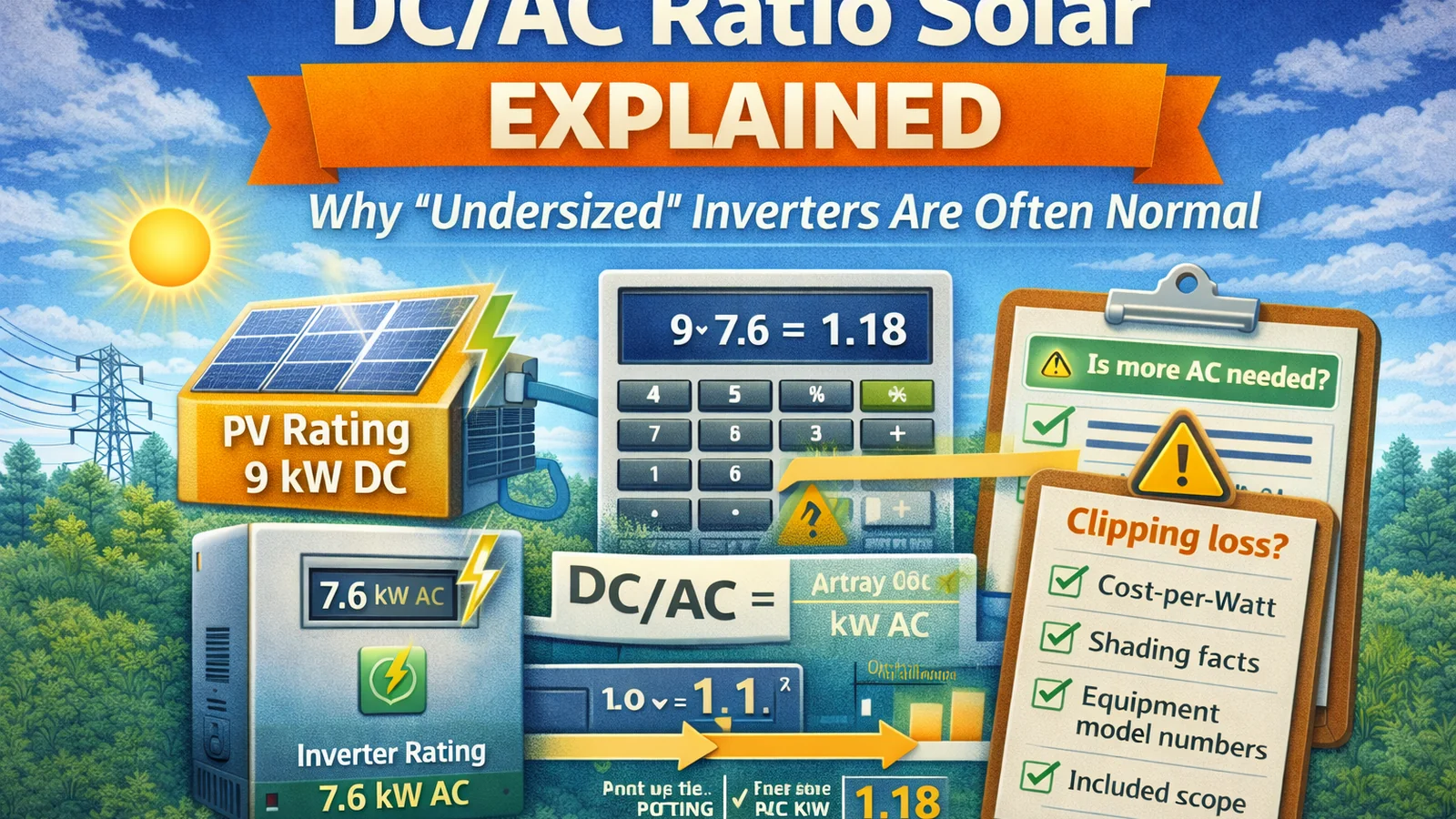

The DC/AC ratio is one of the most confusing lines in a solar quote. You might see a “9.0 kW system” paired with a “7.6 kW inverter” and think something is wrong. In many cases, it’s a deliberate design choice: the solar array (DC) is rated at ideal lab conditions, while the inverter (AC) has a maximum output limit—and real-world solar rarely hits the array’s lab peak for long.
This guide explains what DC/AC ratio means, what “clipping” is, why designers sometimes oversize DC relative to AC, and a simple checklist you can use to compare quotes safely.
Start here: Solar Basics (Start Here)
Who this is for
- You’re comparing solar quotes and seeing different inverter sizes for similar panel sizes.
- You’ve heard the term inverter clipping and want to understand whether it matters for you.
- You want to avoid paying extra for an oversized inverter that doesn’t increase annual energy much.
What DC/AC ratio means (simple definition)
DC/AC ratio (also called inverter loading ratio) compares:
- DC power: the solar array’s nameplate rating in kW (usually at Standard Test Conditions / STC).
- AC power: the inverter’s rated maximum output in kW (what it can deliver as usable AC power).
Formula:
DC/AC ratio = Array size (kW DC) ÷ Inverter size (kW AC)
Example: 9.0 kW DC array with a 7.6 kW AC inverter → 9.0 ÷ 7.6 = 1.18.
If you still want the basics of power vs energy: kW vs kWh in Solar
Why DC is often larger than AC (the “real world” reason)
Solar panels are rated at STC, but real conditions vary every minute: sun angle, clouds, temperature, wind, dust/soiling, shading, and equipment conversion losses all change output. Manufacturers and modeling tools recognize that panels do not consistently produce their nameplate STC rating, and this is one reason designers may choose a DC/AC ratio above 1.0.
SolarEdge summarizes the design logic clearly: oversizing means having more DC power than the inverter AC rating, which can increase output in low-light conditions and help the inverter reach full capacity more often—but too much oversizing can reduce total energy (from clipping) and may affect inverter lifetime due to longer high-power operation and heat.
Related sizing basics: Solar Components & Sizing Basics
What is inverter clipping (and should you worry?)
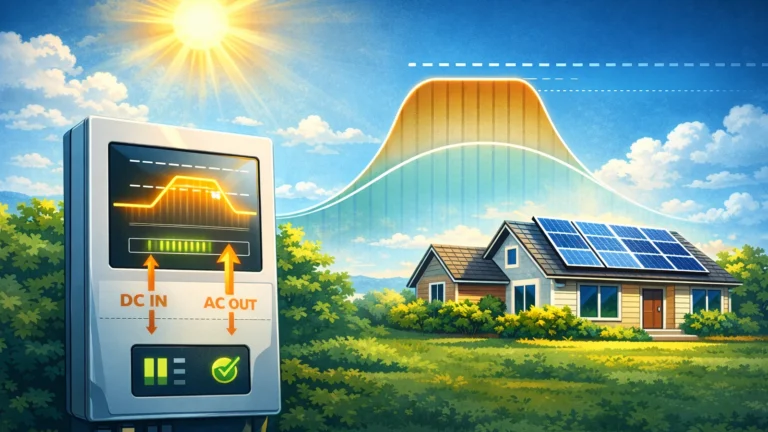
Every inverter has a maximum AC output. If the DC array produces more power than the inverter can convert at that moment, the inverter limits the output to its maximum. The “extra” potential power is not converted, which creates an energy loss called clipping.
Clipping isn’t automatically bad. A little clipping on the sunniest hours can be an acceptable tradeoff if the higher DC/AC ratio improves production during many more hours of the year (especially mornings, late afternoons, and hazy/low-light periods).
Key point: What matters is not a single peak moment—it’s the balance between:
- More energy in low/medium light (benefit of higher DC/AC), and
- Lost energy during peak sun (clipping loss).
A practical benchmark: why many tools start around ~1.2
If you’ve used PVWatts (NREL’s widely used production calculator), you may notice it includes a “DC to AC Size Ratio” in advanced parameters. NREL has updated PVWatts defaults over time, including changing the default DC/AC size ratio from 1.1 to 1.2 to reflect market trends. That doesn’t mean 1.2 is perfect for every roof—only that it’s a common starting point in modeling.
Related: Peak Sun Hours Explained
Related: Solar Performance Ratio (PR) Explained
When a higher DC/AC ratio can make sense
Installers may recommend a higher DC/AC ratio when it helps annual production and/or reduces cost without unacceptable clipping. Common situations include:
- Cooler or windier climates: panels operate more efficiently at lower temperatures, but also may spend fewer hours at extreme peak output—your installer should model this for your site.
- East–west arrays: splitting panels across two roof faces often spreads production across more hours, which can reduce peak clipping compared to a single perfect south-facing plane.
- Shading or non-ideal orientation/tilt: if peak output is naturally limited by the site, oversizing DC can help recover energy in the many non-peak hours.
- Budget tradeoff: a slightly smaller inverter with a bit more DC can sometimes improve total kWh/$ value—if the manufacturer limits are respected.
When a lower DC/AC ratio may be safer
- Very hot climates + ideal south-facing roof: if your array frequently approaches inverter max, clipping can become more significant (your model should show it).
- Strict equipment limits: every inverter has DC input limits and manufacturer guidelines. Exceeding them can be a warranty risk.
- Export limits or specific utility rules: in some areas, you may be required to cap AC export or follow grid-operator constraints—your installer should explain how the design complies.
Original value: DC/AC ratio decision table (quick interpretation)
| What you see in the quote | What it usually means | What to ask next |
|---|---|---|
| DC/AC < 1.0 | Inverter is larger than the array; often unnecessary unless future expansion is planned | “Is this sized for adding panels later? If not, what benefit justifies the added cost?” |
| DC/AC around ~1.1–1.3 | Common modeling range; often chosen to keep inverter loaded more often with limited clipping | “Show me the modeled clipping loss and the assumptions behind the kWh/year estimate.” |
| DC/AC very high (relative to manufacturer guidance) | Higher risk of clipping and/or warranty/design non-compliance | “What is the manufacturer’s maximum allowed DC/AC ratio for this inverter model?” |
Quote checklist: 9 questions to ask your installer (copy/paste)
- 1) Is system size quoted as kW DC, kW AC, or both? Ask them to label clearly.
- 2) What DC/AC ratio are you designing to, and why for my roof?
- 3) What is the modeled clipping loss (kWh/year or %), and can you show the simulation output?
- 4) Which production model/tool was used, and what loss assumptions were included? (PR / loss factor matters.)
- 5) What inverter model number is used, and what is the manufacturer’s maximum allowed DC/AC oversizing?
- 6) Does your design stay within the inverter’s DC input limits (voltage/current) and warranty requirements?
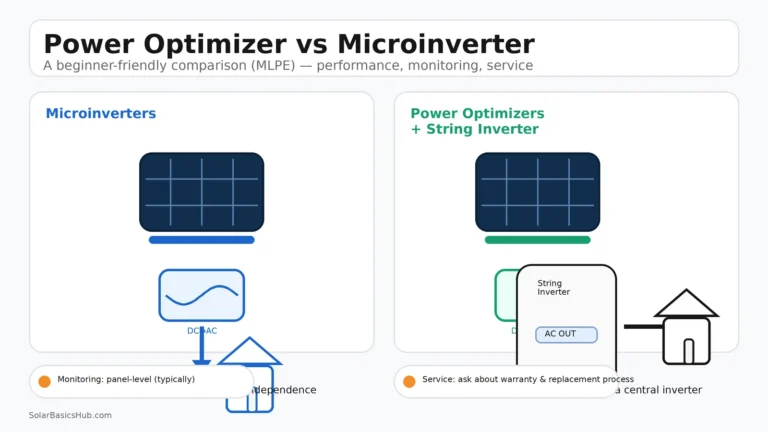
- 7) If there’s shading or multiple roof faces, how does inverter choice handle it? (string vs microinverter vs optimizers)
- 8) What happens if the inverter derates due to heat? (some inverters reduce power when overheating)
- 9) What is the upgrade path? “If I add panels later, will I need a new inverter?”
Related inverter choice: String Inverter vs Microinverter
Common misunderstandings (fast fixes)
- “A 10 kW system means 10 kW all day.” No—nameplate ratings are not constant output; real output varies by sun, temperature, and losses.
- “Clipping means the system is broken.” Not necessarily—small clipping can be an intentional design tradeoff.
- “Bigger inverter always means more annual energy.” If the array rarely hits inverter max, a larger inverter may not increase yearly kWh much.
When to consult a professional
- If a proposal includes work near your main panel, meter, or service equipment, use licensed professionals for safety and code compliance.
- If the installer cannot provide the inverter datasheet limits (maximum DC/AC ratio, input limits), get a second opinion.
- If your roof has complex shading, multiple orientations, or structural concerns, consult a qualified solar designer and (if needed) a roofing/structural professional.