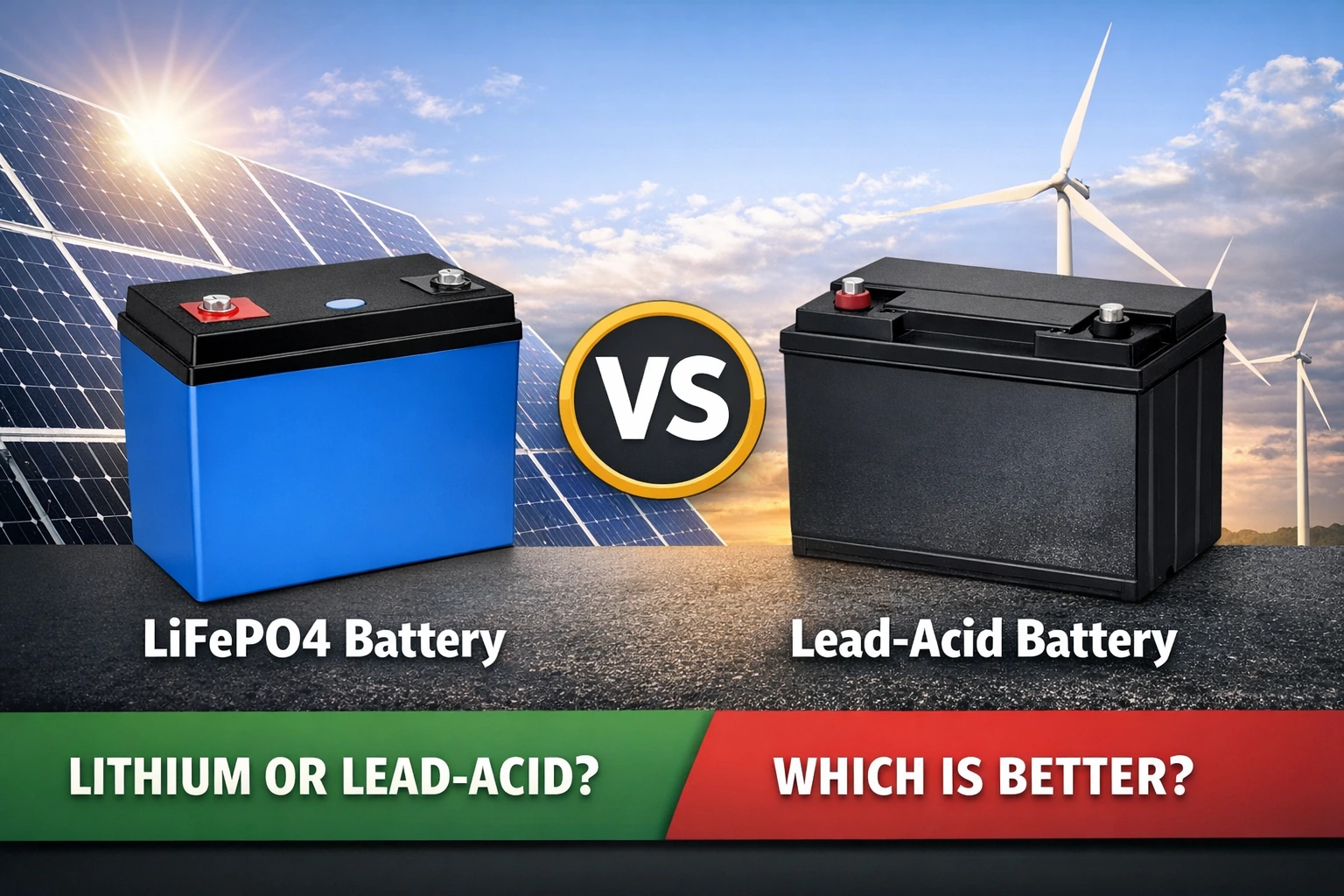

If you’re adding batteries to solar (or planning backup power), you’ll usually compare two families: LiFePO4 (lithium iron phosphate) and lead-acid (flooded, AGM, or gel).
Both store energy. The difference is how much usable energy you get, how long the battery lasts, and how “forgiving” it is day-to-day.
Who this is for
- Beginners choosing batteries for backup power or off-grid
- Anyone confused by “Ah, kWh, DoD, cycles”
- People comparing quotes where lithium costs more upfront
The biggest difference (plain language)
- LiFePO4 is usually more usable energy + longer lifespan (higher upfront cost, lower lifetime cost in many cases).
- Lead-acid is usually cheaper upfront but can wear out faster, especially if deeply discharged often.
LiFePO4 vs lead-acid: quick comparison table
| Feature | LiFePO4 (Lithium) | Lead-acid (Flooded/AGM/Gel) |
|---|---|---|
| Upfront cost | Higher | Lower |
| Usable capacity | Often higher usable % | Often lower usable % (to protect lifespan) |
| Cycle life | Usually much longer | Usually shorter (depends on depth of discharge) |
| Maintenance | Low | Flooded may need maintenance; AGM/gel less |
| Weight/space | Lighter, more compact | Heavier, bulkier |
| Best for | Frequent cycling, long-term value | Tight budgets, occasional backup |
Tip: Don’t compare by “battery type” alone—compare the actual specs of the model you’re buying.
4 specs you should understand before buying
1) Capacity (kWh)
Capacity tells you how much energy is stored. It’s easiest to think in kWh (not just Ah).
2) Usable capacity (DoD)
A battery might be “10 kWh,” but you may not want to use all of it regularly. “Usable” matters more than “nameplate.”
3) Power output (kW)
Power is how fast the battery can deliver energy. High-power appliances need higher kW capability.
4) Cycle life + warranty
Cycles tell you roughly how many charge/discharge cycles it can handle. Warranty tells you what the manufacturer is willing to stand behind.
Decision checklist: which one should you pick?
Choose LiFePO4 if:
- you plan to cycle the battery often (daily or near-daily)
- you want better long-term value and longer lifespan
- you want a lighter, more compact battery bank
- you want simpler maintenance
Choose lead-acid if:
- you need the lowest upfront cost
- your battery will be used occasionally (rare outages)
- you have space and can tolerate heavier equipment
- you understand it may need replacement sooner
Common mistakes to avoid
- Buying by Ah only: convert to kWh to compare fairly.
- Ignoring usable capacity: two “same size” batteries can deliver very different real energy.
- Forgetting the inverter limits: battery choice must match the inverter/charger specs.
Simple planning framework (no math pain)
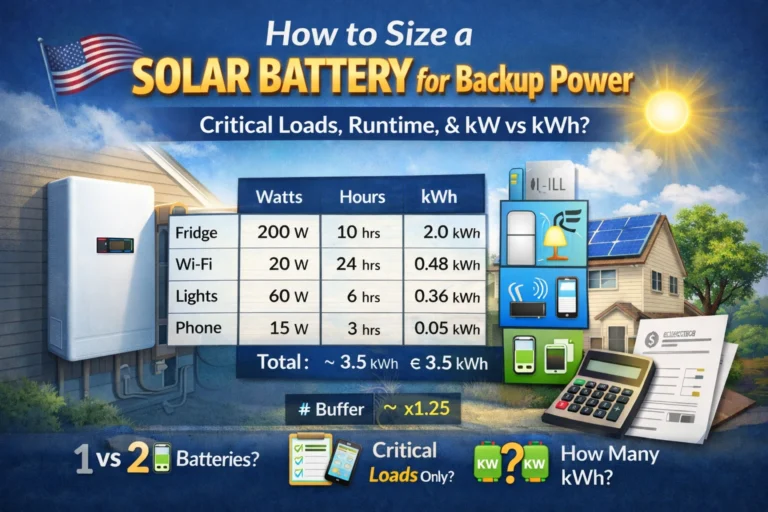
- Decide your goal: backup essentials or full-house backup
- Estimate “hours of backup” you want
- Choose capacity (kWh) and power (kW) that fit that goal
- Then pick chemistry based on: budget vs lifespan vs usage frequency
When to consult a professional
Battery systems involve high power and critical safety design (especially ventilation, protection devices, and code compliance). For any installation planning, consult a qualified solar installer/electrician.